
Race training · 100 miles and long trail
Autumn 100 training: four out-and-back legs, an October night and no crew
Darren Ware, ultra running coach · updated · 9 minute read
- Distance
- 100 miles / 161 km, four 25-mile out-and-back legs
- Start · finish
- Goring Village Hall, Oxfordshire
- Ascent
- 5,000 ft / 1,500 m
- Time limit
- 28 hours · 09:00 Saturday start · cut-offs at all 16 aid stations
- Crew
- Not permitted at any stage
- Pacers
- One at a time, from mile 75 only
- Weather
- Freezing with rain or snow to over 20°C, per the organiser
- Finish rate
- About 74% (2025: 175 finishers; 236 starters, secondary)
- Next edition
- Saturday 17 October 2026 · 2027 listed for 16 to 17 October
- Entry
- 50-mile finish under 15 h · minimum age 20 · 250 places · £220
The Autumn 100 is Centurion's October hundred, and its shape matters more than its climbing. You run four 25-mile legs, each out and back to the village hall at Goring-on-Thames. Leg one follows the Thames Path to Little Wittenham. Legs two and three take the Ridgeway, to Swyncombe and then to Chain Hill. Leg four goes back along the Thames to Reading. The race starts at nine on a Saturday, climbs 5,000 feet in total and allows 28 hours. In 2025, 175 people finished. Centurion doesn't publish starters; Open Tracking, a secondary source, lists 236, which puts the finish rate near three in four.
The Thames Path 100 shares some of this river and gives you 30 hours, a crew and a pacer from halfway. The Autumn 100 gives you less time, no crew and a pacer for the last 25 miles only. Much of it runs in the dark.
Four legs, one village hall
Goring sits at miles 0, 25, 50, 75 and 100, with hot food each time. Runners report that each return makes stopping easy. One found the returns got "progressively harder" as the clock and the weather turned. I train for the leaving. Long runs go out and back past the car or the front door, with dry kit and food waiting, and the rule is in and out inside ten minutes. I log how long the stop took. Over a build that number should fall.
Nobody hands you anything
The organiser's rule is short: crews are not permitted at any stage of the race. Every layer change, every refill and every decision to eat is yours. Nobody is watching for the moment you stop eating. So my Autumn 100 athletes do their long runs alone, change layers with cold hands, and eat to an alarm rather than appetite. The mandatory kit adds a warm hat and gloves to the usual Centurion list of a taped waterproof, two lights and a survival blanket, with a one-hour penalty for each missing item.
A hundred run mostly in the dark
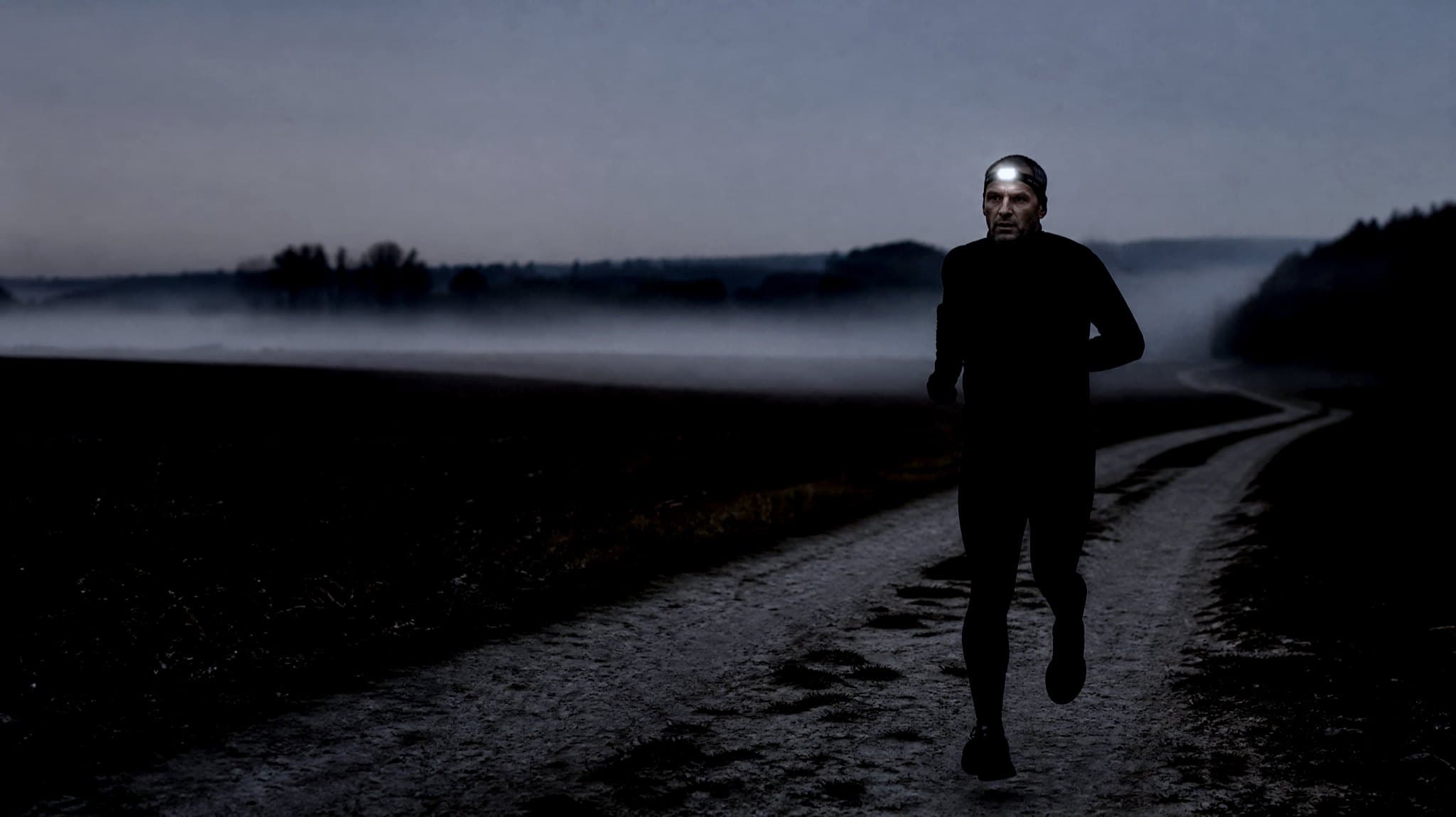
Mid-October nights are long. For a runner aiming at 24 hours, leg three and much of leg four run in the dark. Runners describe leg three on the Ridgeway as fully dark and as where stomachs go; one 2018 finisher "ended up decorating the Ridgeway". The organiser warns that leg three can be extremely windy and that fog forms over the meadows on leg four in the dark. The pacer from mile 75 earns their place there: by leg four, one 2022 finisher handed every decision to hers. I build night runs into September, on the Ridgeway if possible, with cold-weather fuelling and the block from the night note.
Wind, mud and river fog
About 60% of the course runs beside the Thames. The organiser describes temperatures from freezing with rain or snow to over 20°C, substantial sections that turn wet or muddy in bad weather, and flooding. The 2025 report contrasted dry ground with 2024, when flooding plagued the course. A 2018 runner called leg four "some of the worst conditions I have ever experienced". I choose shoes on the week's forecast, and the build includes long runs in mud so race day isn't the first time.
If you start on 17 October
You are four days out, and no session now adds fitness you will feel. Follow the taper note. Test the night kit in the dark one evening this week, gloves on. Rehearse your Goring routine once more. For 2026 the race page accepts qualifiers from 1 January 2021; for 2027 Centurion's qualifying page says 1 January 2022, so check which applies to you.
Reading an out-and-back build
An out-and-back course hands you a clean comparison: the same ground twice. I use it in training. On out-and-back long runs I compare pace at the same heart rate on the way home against the way out. On firm towpath that is a fair read. On mud it is a rough proxy, and I say so to the athlete. If the return half drifts, the possible contributors are fuel, cold, legs or a long stop. The data shows the drift; the athlete's notes and I work out which.
Building for October
For a 2027 entrant with a fifty already done, I use 26 weeks, starting in mid-April. Two strength sessions a week throughout, never in the 48 hours before a long run. The long runs fit round work using the full-time job note.
- Weeks 1 to 8 · mid-April to mid-June
Capped easy volume and strength. The long run grows about 10% at a time against your longest of the previous 30 days, and holds after three steps up.
- Weeks 9 to 16 · the out-and-back
Every long run goes out and back on one path, so the return half can be set against the outward half. A dry-kit stop at the car halfway, timed, with a ten-minute limit.
- Weeks 17 to 23 · alone and in the dark
A back-to-back every two to three weeks, the second day at 40%, then 60%, then 70% of the first. The biggest, about 5 hours then 3.5, lands five weeks out. Twice, a long run alone that starts late afternoon and finishes on the Ridgeway after dark, eating to an alarm with gloves on.
- Weeks 24 to 26 · taper
Volume down a quarter, then 40%, then 60%, with every run kept. Carbohydrate has climbed 10 g an hour every one to two weeks from 30 g, and from two weeks out it holds at race rate.
My checklist for an Autumn 100 runner
- Minutes spent at the car on looped long runs, and whether the stops shrink across the build.
- Pace at the same heart rate on the return half of out-and-back runs against the outward half.
- Whether the athlete can open food and change a layer in gloves, at night.
- Carbohydrate per hour on cold night runs, when thirst and appetite drop.
- Blisters and shoe choice after long runs in mud.
- Sleep in the final fortnight.
Facts checked October 2026 against centurionrunning.com: the 2026 race page, aid stations and cut-offs, info pack, 2025 race report and 2025 preview. 100 miles as four 25-mile out-and-back legs from Goring Village Hall, 5,000 ft of climbing, a 09:00 start and 28-hour limit with cut-offs at all 16 aid stations, no crew, one pacer from mile 75, a 50-mile qualifier under 15 hours, minimum age 20, 250 places, a £220 fee (£222 unaffiliated), the weather, wind, fog and mud warnings, about 60% of the course beside the Thames, and 175 finishers in 2025. The starter count of 236, and so the 74% finish rate, is secondary (Open Tracking). The 2026 edition runs on 17 October and had not run when checked. No 2027 race page exists yet; the 2027 dates come from Centurion's SiEntries listing. Qualifier windows: 1 January 2021 on the 2026 race page, 1 January 2022 on the 2027 qualifying page. Runner experiences of the hub, leg three and leg four come from published race reports and are colour, not data. Evidence level: night running and fuelling physiology matches the field notes; the hub drill and the solo rehearsals are coaching practice, and so are the 26-week build, the back-to-back steps, the fuelling ladder and the taper cuts. The 17 October 2026 date, 09:00 start and 28-hour limit were re-checked on 13 October 2026.
Running the Autumn 100?
Tell me your fifty, how you cope alone at night and what happens when you sit down at an aid station.