
Race training · Multi-day and extreme duration
The Wrath training: 236 non-stop miles up the Cape Wrath Trail
Darren Ware, ultra running coach · updated · 7 minute read
- Format
- Non-stop, solo, self-sufficient
- Distance
- 236 mi / ≈380 km
- Ascent · descent
- 13,249 m each (asterisked, unexplained)
- Time limit
- 168 h · 13:00 2 May to 13:00 9 May 2027
- Route
- Fort William to Cape Wrath lighthouse
- Navigation
- Unmarked · GPS mandatory
- Conditions
- Days 5 to 15°C, nights 2 to 8°C
- Checkpoints
- Support details not yet published
- Entry
- £1,495 · vetted · 100 places
This page used to describe the Cape Wrath Ultra, and that race is gone. Ourea Events ran it as an eight-day supported stage race, about 400 km from Fort William to Cape Wrath with a camp every night. Ourea ceased trading in March 2026 and went into administration, and the 2026 edition did not run. Ultra Endurance Series Ltd, the company behind the Spine Race, bought the Cape Wrath Ultra trademark and has rebuilt the event as The Wrath. It keeps the start and the lighthouse and changes almost everything between them.
The Wrath is 236 miles of the Cape Wrath Trail in one push. It starts in Fort William at 13:00 on 2 May 2027 and the clock stops 168 hours later, at 13:00 on 9 May. The organiser calls it "solo, self-sufficient, non-stop, brutal". You get no pacers and no outside support, and nobody marks the route. There are 100 places.
The sums, then the ground
Start with the sums. 380 km in 168 hours is about 2.3 km/h, averaged over everything: moving, eating, sleeping, fixing feet. The Spine asks for about 2.8. On paper The Wrath is the gentler clock. Then look at the climbing. The organiser gives 13,249 m of ascent, which is about 35 m for every kilometre. The Spine is about 25.
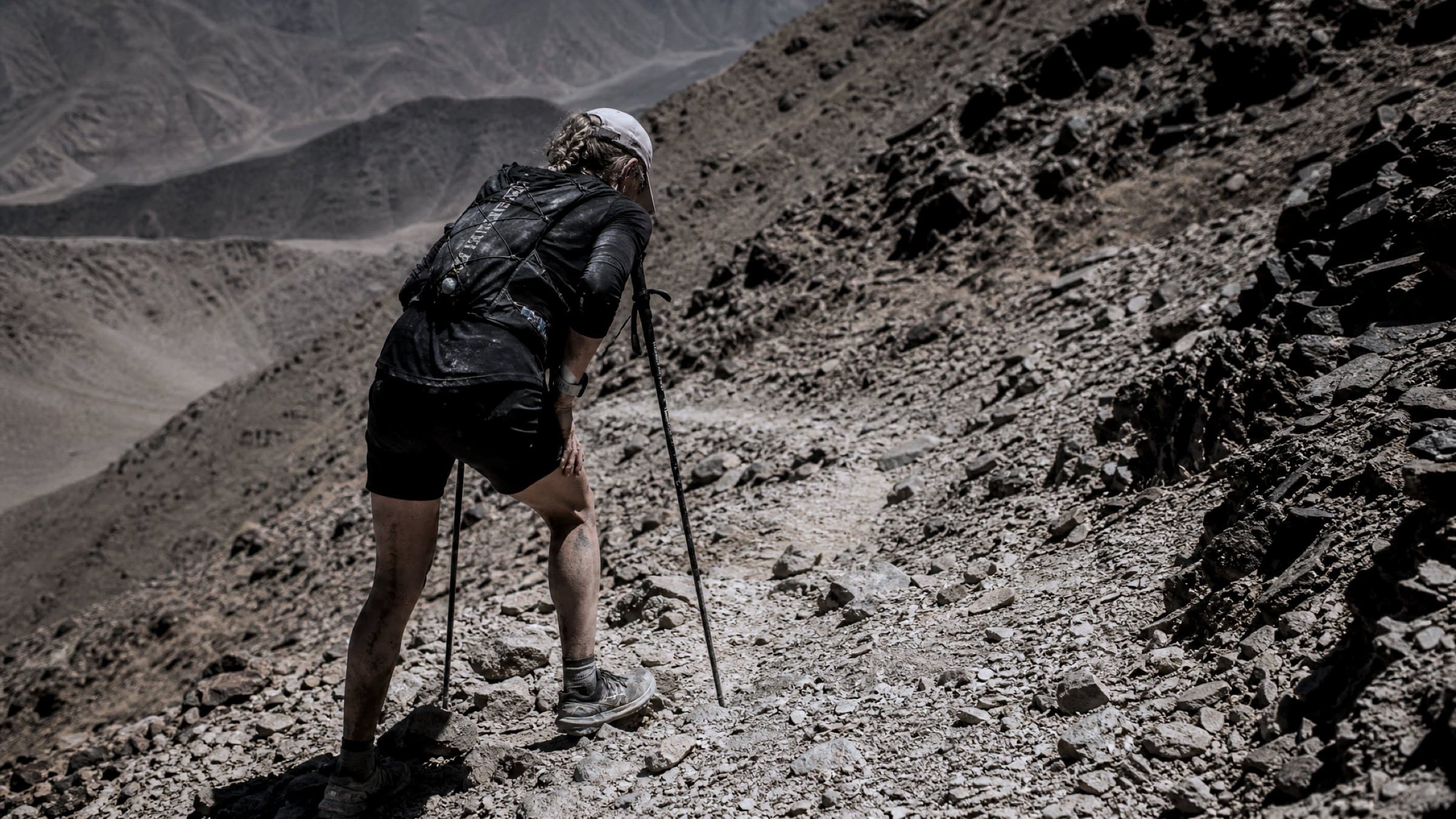
And the ground is worse than the number. Ourea's own training guidance described the trail as "very rough, wet, boggy and pathless" in places, which makes running very difficult. On ground like that, 2.3 km/h is about what you have left once the bog has taken its share.
Spring light, wet cold
The organiser lists daytime temperatures of 5 to 15°C, nights of 2 to 8°C, and about 15 hours of daylight in May. That turns the Spine problem round. Most of your moving happens in the light, and the dark comes in short blocks. The cold is milder, but 2°C on a night when you're soaked from a day in bog, at walking pace, is enough to chill you hard. The skill here is managing wet but not frozen: getting a dry layer on before you stop, not after you start shivering, and keeping one set of clothes dry for sleeping.
Short nights change sleep too. The dark won't force you to stop, so every rest is a decision you make. I want that decision made before the race, as a plan with a trigger, and rehearsed once in training. The night note covers the rehearsal.
No path, no waymarks
The route is unmarked. GPS is mandatory, and the organiser says you still need competent map and compass work. On a pathless stretch the GPS tells you where the line is. It doesn't tell you the fastest way across the bog between you and it. That is route choice, and it's trainable: contour or go straight, the drier ground or the shorter line, when to leave the GPS line because the ground says so. Practise it on real rough ground, tired, with the map as a backup you have practised switching to.
Carry it, because the support isn't published
When I checked, the organiser's position on checkpoints was that drop bags, food, sleep space and medical access were still being confirmed, and that runners should expect to carry most of what they need between checkpoints. The mandatory kit list was also still to come. For scale only, the shorter Wrath Challenger South lists one full-support checkpoint at Kinloch Hourn and two welfare checkpoints over its 96 miles. Don't read the full race's plan into that.
So I'd train with a pack heavy enough to be honest, closer to expedition weight than a checkpoint race, and cut it back when the kit list lands. The loaded hiking note is the method. Feet need a different plan from the old race too. The stage race gave your feet a tent and a dry night every evening. On The Wrath your feet get whatever you carry and nothing more, so the routine for drying, taping and changing socks has to work on a wet hillside.
Where durability shows up
On this race durability means one thing: whether you can still move well on rough ground on day five. The data I can trust is narrower than on a road or trail hundred. GPS pace on pathless bog is noisy, and heart rate under a heavy pack in wet cold is a blunt signal. So I use the clean running reads in the base months, and from the specific block I lean on a repeated test: the same rough loop, the same pack weight, timed every few weeks. If the loop gets slower, something is going down, and the watch can't say whether it's legs, sleep or fuelling. I work that out with the athlete's own account beside the numbers.
The build
The organiser vets every entry and expects prior long-distance mountain or expedition-style ultra experience, and points newer runners at the 56-mile Wrath Sprint South instead. A 2 May start puts the specific block in February to April, in Highland conditions colder than the race itself, which is no bad thing. The fee is £1,495, with a £747.50 deposit and the balance due 100 days before the start, which by my count is 22 January. I use that date as a checkpoint for the athlete too: by then the base should be done and the first long rough-ground weekends should have gone to plan.
The shape: capped easy volume and two strength sessions through the autumn, then long days on pathless ground with a real pack, back-to-backs, route-choice practice, one overnight rehearsal with the sleep plan, and the full feet routine done outdoors in the wet. Then a generous taper.
What I watch
- Time over the same rough test loop with the same pack, repeated through the build.
- Route choice on pathless ground: the line taken against the line planned.
- Feet after a long wet day with no proper drying stop.
- Training pack weight against the kit list once it's published.
- Whether the first day in training is run too hard because the average feels slow.
- Sleep in the overnight rehearsal: chosen to plan, or forced.
Facts checked 3 October 2026 against thewrathrace.com: the Wrath 2027 race page, the event and home pages, and the Challenger South and Sprint South pages. Confirmed there: 236 miles, Fort William to Cape Wrath lighthouse, 13:00 2 May to 13:00 9 May 2027, a 168-hour limit, 13,249 m of ascent and descent, temperatures and daylight as above, 100 places, £1,495 with a £747.50 deposit, a vetted entry, an unmarked route with GPS mandatory, and the "solo, self-sufficient, non-stop, brutal" description. The ascent and descent figures carry an asterisk the organiser does not explain anywhere on the site; treat them as provisional. The 380 km, the 2.3 km/h average, the climb per kilometre and the 22 January balance date are my arithmetic. Checkpoint locations and support, drop bags, sleep provision, cut-offs, the kit list and any formal qualifiers were not published when checked. The Ourea history (ceased trading and administration in March 2026, 2026 edition cancelled, trademark acquired by Ultra Endurance Series Ltd) is from capewrathultra.com and oureaevents.com. This page replaces my earlier guide to the eight-day stage race, which no longer runs. Evidence level: the physiology matches the field notes; the terrain description is the former organiser's; the training approach is coaching practice.
Thinking about The Wrath?
Tell me your longest multi-day effort and how your navigation holds up on pathless ground.