
Race training · 100 miles and long trail
Hardmoors 110 training: the Cleveland Way reversed for 2027, moors first and coast last
Darren Ware, ultra running coach · updated · 8 minute read
- Distance
- About 110 miles (111 on the organiser's checkpoint list)
- Route
- Cleveland Way, Helmsley to Filey in 2027 only
- Ascent
- 16,500 ft / 5,000 m
- Time limit
- 36 hours · 08:00 Saturday start · 8 timed cut-offs
- Navigation
- Self-navigated on national trail waymarks · map required
- Support runner
- One at a time from Gribdale Gate, about mile 45
- Finish rate
- About 51% (2026, secondary)
- Next edition
- Saturday 22 May 2027, 20th edition
- Entry
- No qualifier published · minimum age 20 · £200 to 30 Nov 2026
The Hardmoors 110 follows the Cleveland Way National Trail over the North York Moors and down the Yorkshire coast. That means about 110 miles and 5,000 m of climbing in 36 hours, with your own navigation and a map. It usually runs from Filey to Helmsley. For the 20th edition the organiser has reversed it for one year only: 2027 starts at Helmsley at 08:00 on Saturday 22 May and finishes at the Evron Centre in Filey. Most race reports online describe the usual direction, so read them backwards.
Moors first, coast second
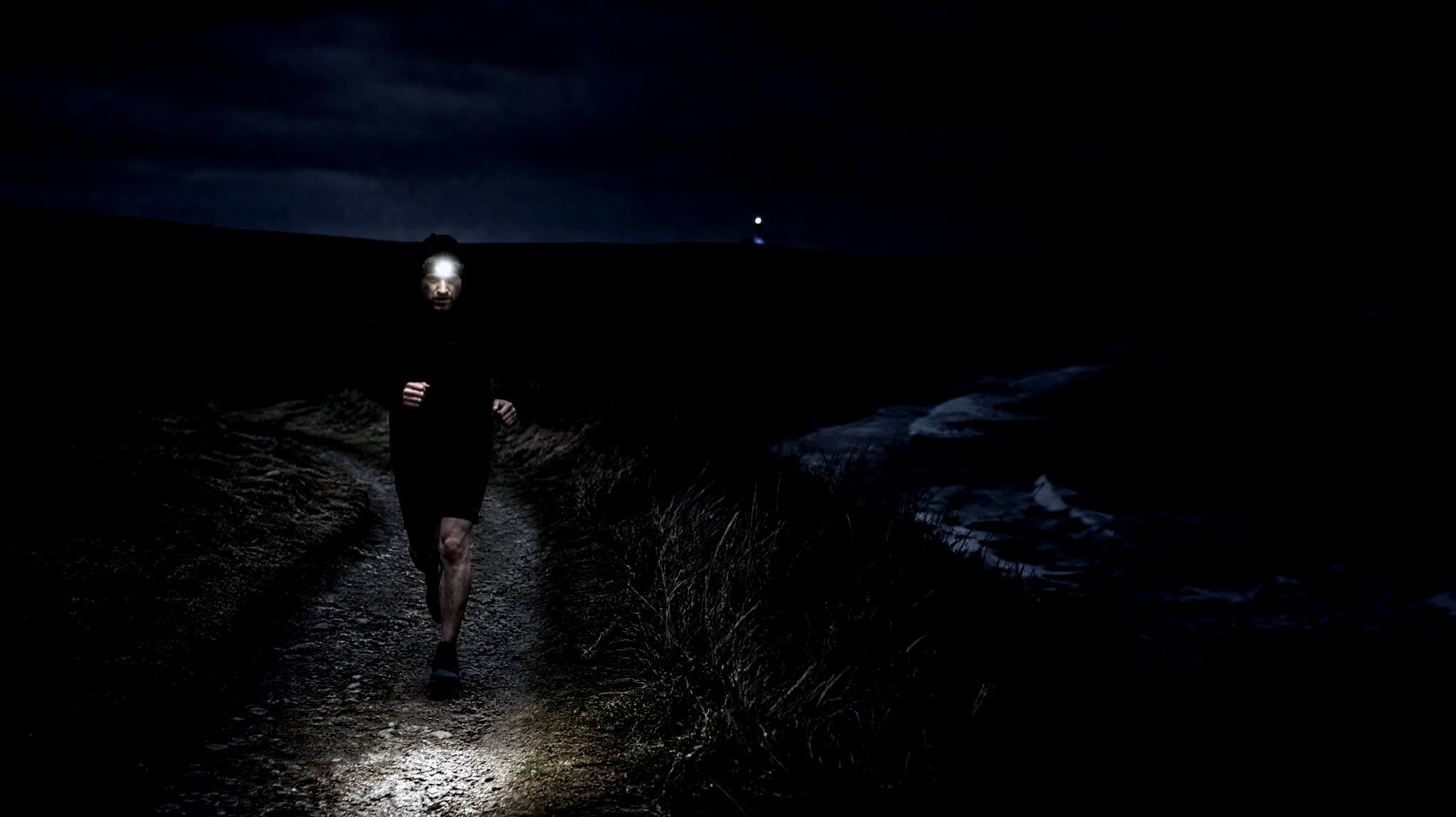
On the cut-offs, the back of the field reaches Clay Bank (mile 31) by 18:30, Kildale (42) by 22:00 and Saltburn (57) by 03:00. So the slower half crosses the high moors into the night and meets the sea in the small hours. In the usual direction, runners report night navigation on the moors as the big worry, especially around Bloworth Crossing. One wrote that he was "paranoid about missing an important turning". Thick mist made a 2013 race hard "even on the flat". Another runner who under-fuelled described being "tired beyond belief", then a 45-minute rest in a car and navigation errors after it. That is a fuelling story before it is a navigation one. The carbs note sets the hourly target I'd hold through the moors.
Then the coast, on spent legs
A 2013 runner, who ran Helmsley to Filey as 2027 will, called the coastal half "like spending 12 hours on a step machine at the gym". This year those steps come after 57 miles of moor. The same runner's legs stopped running within two miles of Ravenscar. I prepare for that with step-downs and loaded step-ups through the winter, then sets of real coastal steps at the end of long days in the spring. The late-race legs note explains why tired legs lose the steps first.
At Runswick Bay, mile 69, the tide decides. If it is in, you wait for the marshal, and the organiser takes the waiting time off your finish time. One runner "just about made it through the rocks". Through Scarborough you must stay on the seafront.
Map, support runner and crew rules
The organiser tapes the course only from the end of the Cleveland Way to the finish. Everything before that is national trail waymarks and your map. There are undisclosed checkpoints, and missing one means disqualification. One support runner at a time may join from Gribdale Gate and must not carry your kit. Crew may not meet you at White Horse, Sneck Yate, Osmotherley, Kildale, Hornblower or Ravenscar. The organiser suggests Sutton Bank, Gribdale Gate, Skinningrove, Sandsend and Robin Hood's Bay instead. Drop bags go to Kildale, Runswick Bay and Ravenscar. Kit penalties run from two hours added to disqualification, and Hardmoors 160 runners share the trail.
Where the race page contradicts itself
The organiser's 2027 page disagrees with itself in places, and you should know where. The headline says 110 miles; the body says 111, and so does the checkpoint table. The header says 150 places; the entry section says 200 solos and 50 relay. The 2027 entry page sets the minimum age at 20; the 2026 page said 18. Some text still sends finish bags to Helmsley, carried over from the usual direction, and the Ravenscar, Kildale and finish venues read "TBC". The page also says all runners must have motorised back-up unless they meet the unsupported category, without spelling out what that category needs beyond extra kit. Email the organiser before you plan around any of these. The organiser doesn't publish a finish rate. Open Tracking and DUV, both secondary, put 2026 at about 51 finishers from roughly 100 solo starters.
Reading moor and coast in the data
On moorland and coastal steps, pace and grade-adjusted pace are rough proxies at best. So I read like for like: time on a known set of steps fresh against after eight hours, heart rate at an easy effort across long moor days, and the athlete's log of navigation errors on night sessions. If the step times fall away late, the possible contributors are leg strength, fuel or sleep. The data points at the slowdown, and the athlete and I decide which to work on.
A spring build for a May start
Entries close on 22 April 2027, and the fee rises from £200 to £220 after 30 November 2026. A winter of capped easy volume and step-based strength. February to April: long days on the Cleveland Way itself, at least one night recce of the moors between Clay Bank and Kildale, and back-to-back weekends on the coast. Loaded walking for the climbs, from the hiking note. If you have only raced marked courses, the Lakeland 100 guide covers navigation training on tired legs. Check the tide table for Runswick Bay on race weekend.
On my list for a Hardmoors runner
- Time up and down a set flight of coastal steps at the end of a long day, against fresh.
- Navigation errors on night moor sessions, logged each time.
- Carbohydrate per hour on the moors after dark, where race reports show under-fuelling.
- Heart rate at easy effort across long moor days, read as a rough proxy on rough ground.
- Feet after wet moorland and the rocks at Runswick Bay.
- Whether the support runner has run with the athlete at night before race day.
Facts checked October 2026 against hardmoors110.org.uk (the race page, the 2027 GPX file's metadata and the terms and conditions) and the organiser's SiEntries entry pages for 2027 and 2026. The 2027 route runs Helmsley to Filey for one year only, about 110 miles (111 on the checkpoint list), 5,000 m of climbing (the GPX metadata gives 4,944 m), an 08:00 start and 36-hour limit with the cut-offs above, 10 checkpoints and drop bags at Kildale, Runswick Bay and Ravenscar, a support runner from Gribdale Gate, the crew rules, the tide rule, self-navigation with a map, minimum age 20, no published qualifying race, the fees and the 22 April 2027 entry deadline. The organiser's conflicts are listed on the page. The organiser does not publish a finish rate; the 2026 figure is secondary (Open Tracking and DUV). Descent and high point are not published. Runner experiences of the moors at night, mist, the coastal steps and Runswick Bay come from published race reports, mostly in the usual direction, and are colour, not data. Evidence level: fuelling and late-race leg physiology matches the field notes; the step work and the night recce are coaching practice.
Running the Hardmoors 110 in 2027?
Tell me your longest self-navigated day and what coastal steps do to your legs after dark.