
Race training · 100 miles and long trail
Leadville Trail 100 training: a hundred miles that never drops below 9,000 feet
Darren Ware, ultra running coach · updated · 8 minute read
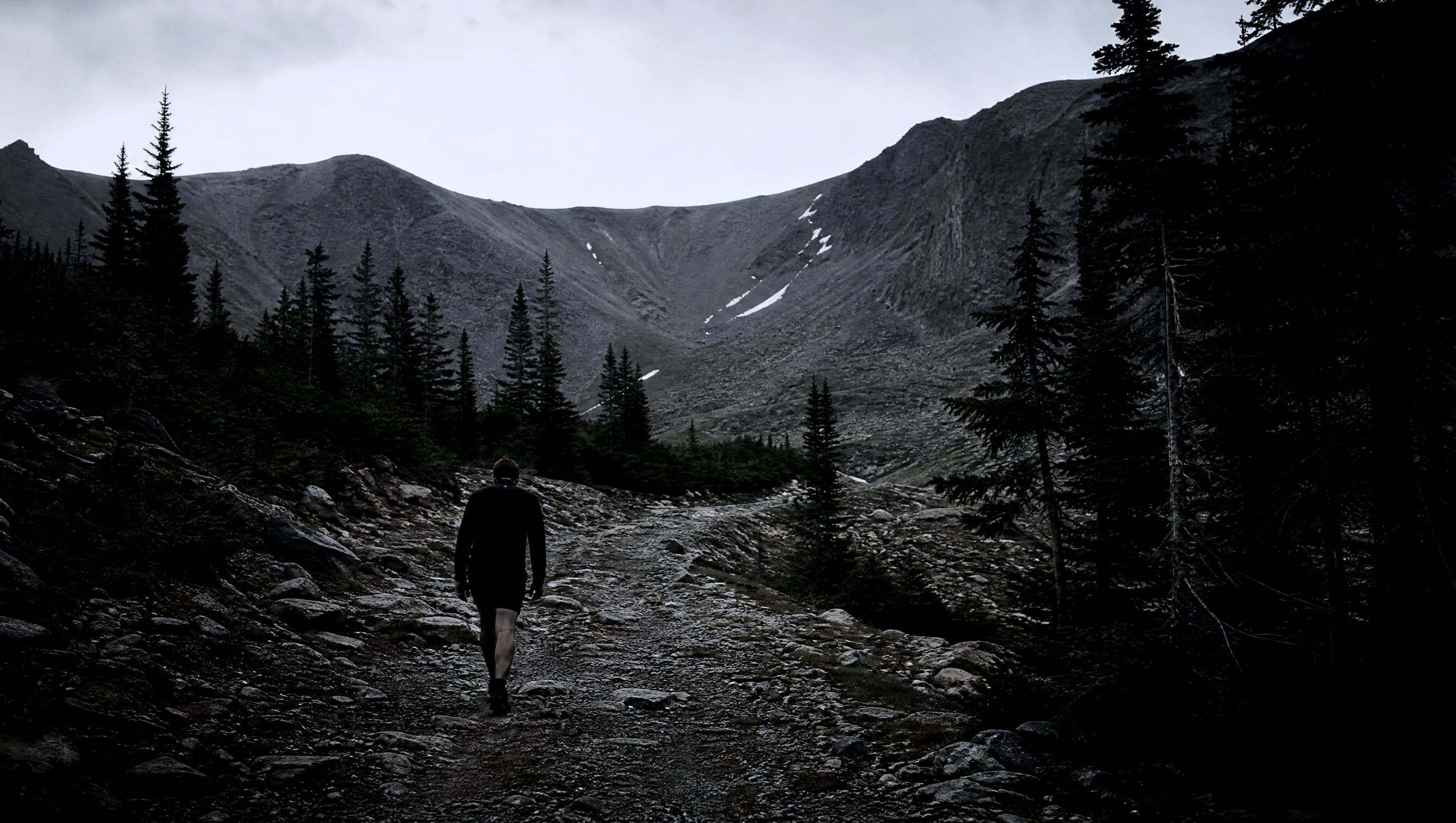
- Distance
- 99.7 miles / 160 km, out and back
- Start · finish
- Leadville, 10,200 ft / 3,109 m
- Ascent
- 15,492 ft / 4,720 m
- High point
- Hope Pass, 12,526 ft / 3,818 m, crossed twice
- Low point
- 9,206 ft / 2,806 m
- Time limit
- 30 hours · 04:00 start · sub-25 h big buckle
- Weather
- August highs around 25°C, lows below freezing
- Finish rate
- About 59% (2026, rerouted course)
- Entry
- Lottery, unweighted, December · $495 (2026)
Leadville is an out-and-back hundred from the highest incorporated city in the United States, starting at four in the morning at 10,200 feet and never dropping below 9,200. The middle of the race crosses Hope Pass, 12,526 feet, twice: out to the turnaround at Winfield and back. The limit is 30 hours; under 25 earns the big buckle. In 2026, on a course rerouted for a wildfire, about six in ten starters finished. On the normal course it is often fewer.
The climbing is modest for a mountain hundred. The altitude is not. Leadville is the race that punishes runners who confuse the two.
The whole race is above 9,000 feet
At 10,000 feet a sea-level runner has around a third less oxygen available per breath, and the effect does not wait for the climbs: easy pace on the runnable shoreline miles around Turquoise Lake costs more heart rate than it should, and the runner who holds their British easy pace there arrives at Twin Lakes already in debt. Then Hope Pass. The organisers write, in capitals, that you should not attempt the round trip to Hope Pass without warm and protective clothing, and they list lightning above the timberline and hypothermia as the hazards that kill. Two weeks at altitude before the race is the preparation that matters most, and the plan treats it as part of the race cost. Where that is impossible, the first 40 miles are run at a heart rate, not a pace, and the cap is set for 10,000 feet.
- 04:00, Leadville
Dark, cold, 10,200 ft. Turquoise Lake by headtorch, mostly runnable.
- Twin Lakes out, 14:15 cut-off
Mile 40. Lake Creek crossing, then 3,400 ft up to Hope Pass, 16:45 cut-off.
- Winfield, 18:50 cut-off
The turnaround at about mile 50. Then straight back over the pass.
- Twin Lakes in, 23:00 cut-off
Pacers can join. Second crossing done in the dark; feet wet again.
- Powerline, around mile 80
The climb everybody remembers, at about 3 am, in the cold.
- 10:00 Sunday
30 hours. Under 25 for the big buckle.
Hope Pass, twice
From Twin Lakes it is around 3,400 feet up to the pass on the way out, a descent to Winfield, and then the same climb again from the steeper side with 50 miles in your legs. Everybody walks it. The runner who walks it well, at a cadence they can hold for an hour with breathing they could talk through, is the runner who gets back to Twin Lakes before the cut-off. The walking note is the training for this; the descents into Winfield and back to Twin Lakes are where the quads pay, and the winter strength work is what protects them.
Winfield and the way back to Twin Lakes
The organiser does not publish where runners drop, and I could not find full split data for recent years. The best count I found is one runner's analysis of the 2012 results, which plotted every DNF location and found "A huge number of people DNF’ing at Winfield, and again at Twin Lakes." He was unsure of his own data, and it is one year. Race reports point the same way. On the 2026 table, the Winfield cut-off at 18:50 left 4 hours 10 minutes to climb back over 12,526 feet and reach Twin Lakes by 23:00, with 50 miles in the legs. A coach who ran the rerouted 2026 race in under 24 hours wrote: "Once you get to Twin Lakes Inbound, the cutoffs are much more friendly but before that, they can be harsh."
Cold, wet feet, night
August in Leadville can bring rain, hail and snow on the same afternoon, and nights in the upper 20s Fahrenheit, below freezing, after 20 hours awake. Lake Creek is crossed twice, so feet are wet twice, and the foot-care and shoe-change plan is rehearsed with crew at Twin Lakes. The second night, on the Powerline climb and around the lake, is where the night note earns its place: layers on before the cold arrives, food by the clock when appetite has gone, and a pacer who has been briefed.
Where durability shows up
Leadville has long runnable stretches, so the watch data is cleaner than most mountain hundreds and the durability reads are good: late-run pace at the easy cap on long runs against the first hour, and how much the big hikes cost once the legs are tired. Through an altitude fortnight, heart rate at easy effort tells me acclimation is taking. The pattern I am looking for is the same as always: engine intact, legs and gut no longer delivering. Then I decide what the next block holds.
A build for the first 40 miles and the second crossing
The lottery is unweighted and drawn in December, and the 2027 date was not out when I checked, so I count 26 weeks back from an August start. Eight weeks of base with two heavy strength sessions a week. Seven weeks of build. Eight weeks aimed at Hope Pass. A three-week taper, two weeks of it high if the calendar allows.
Three sessions get the weight. The discipline long run holds the first two hours under the cap on flat, runnable ground, where British easy pace tempts most. The double hike puts two sustained climbs into a long run, the second near the end, and times the second against the first: that is the crossing that decides the Twin Lakes cut-off. Steep descents, three five-minute repeats at a 5 to 10% grade at least every second week, prepare the drops to Winfield and Twin Lakes. Long runs grow about 10% at a time and hold after three weeks of growth. The biggest weekend, about five hours then three, with the second day starting before dawn in the cold, lands three to four weeks out. Fuelling is rehearsed cold, because appetite goes first at altitude. Heat is rarely the problem here. Discipline in the first 40 miles is.
What I watch
- Easy-pace heart rate on runnable long runs, and the discipline to hold it when the pace feels slow.
- Uphill walking speed at the easy cap on long climbs, over the build.
- Late-run pace on long runs against the first hour.
- Easy-effort heart rate through the altitude fortnight.
- Fuelling in the cold and at altitude, where appetite goes first.
- Recovery after back-to-back weekends, where masters legs get caught.
Facts checked September 2026 against leadvilleraceseries.com: 99.7 miles out and back, start at 10,200 ft, 15,492 ft of gain, Hope Pass at 12,526 ft crossed twice, a low point of 9,206 ft, a 04:00 start and 30-hour limit with the cut-offs above, pacers from Twin Lakes inbound, crew at designated stations only, an unweighted December lottery and a $495 fee in 2026. The organiser's own page gives the Winfield turnaround as both 49.8 and 52.2 miles. The 2026 course was rerouted for the Willow Fire, so its finish rate of about 59% comes from results listings and is not comparable to the traditional route; the 2027 date had not been announced when this was checked. Rechecked October 2026: the race page shows the 2026 cut-off table above and an older table (Twin Lakes out 13:30, Hope Pass 16:00, Winfield 18:00, Twin Lakes in 22:15), and says the 2027 course is still to come. Where runners drop: the organiser publishes no breakdown, the 2012 DNF analysis is from a runner's blog (mitchleblanc.com) and covers one year, and the 2026 quote is from a coach's published race report; both are colour, not data. Evidence level: the altitude and pacing physiology matches the field notes; the course demands are the race's own; the build's week counts, progression steps and taper are my coaching method.
Leadville in the lottery?
Tell me your altitude history and how disciplined your first 40 miles are.