
Race training · Desert and heat
Atacama Crossing training: 250 kilometres that start at 3,200 metres
Darren Ware, ultra running coach · updated · 8 minute read
- Distance
- 250 km · 6 stages over 7 days · self-supported
- Start · finish
- 3,200 m, Arcoiris Valley · 2,400 m
- Ascent · descent
- 2,813 m up · 3,646 m down
- Long stage
- The Long March, 81 km, optional sleep at the overnight checkpoint
- Cut-offs
- At every checkpoint, set from 4 km/h walking
- Pack
- Aim under 10 kg · 7 to 14 kg range · 14,000 kcal minimum
- Conditions
- April highs 22 to 28°C, lows 2 to 6°C · 0°C bag mandatory
- Next edition
- 4 to 10 April 2027, the 19th
- Entry
- US$4,200 · $4,500 late · 18+ · evacuation insurance
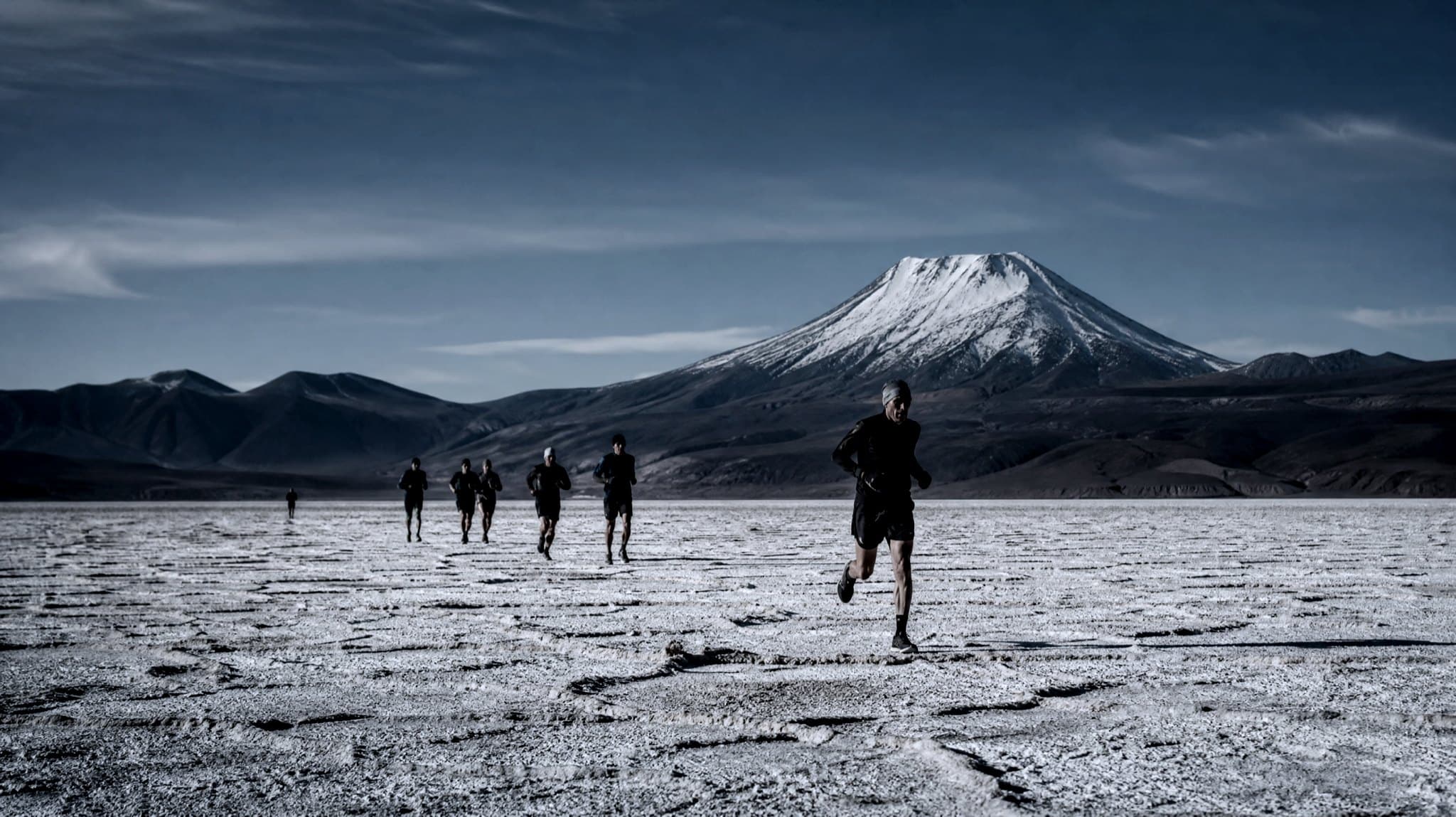
The Atacama Crossing is based at San Pedro de Atacama, Chile. It starts at 3,200 metres in the Arcoiris Valley and finishes six stages and 250 kilometres later at 2,400. You climb 2,813 metres and descend 3,646. The ground runs from salt flat to dune to slot canyon, with river crossings. You carry your food and kit; RacingThePlanet provides water, tents and medics. The 2027 edition, the 19th, runs 4 to 10 April.
I start an Atacama plan with altitude, then the cold at night. Heat comes third.
The first stages are run high
Camp 1 sits above 3,000 metres. A runner who arrives from sea level gets less oxygen with every breath for the first days. Effort climbs, easy pace slows, appetite drops and sleep gets worse. Those first days are stages one and two, with a full pack. The runner who holds their home easy pace there is spending the Long March early.
If the calendar allows, I would arrive a few days early. Either way, the first two stages go by effort, not pace, with the heart-rate cap set lower than at home. At altitude heart rate is a rough proxy at best. It rises for the same work, so I trust the athlete's breathing and effort over the number.
Warm afternoons, nights near freezing
The organiser's April figures are highs of 22 to 28°C and lows of 2 to 6°C. A second organiser page gives averages of 22°C and 5°C. A sleeping bag rated to 0°C is mandatory. Older race reports of 46°C come from September editions. The race now runs in late March or April, and I leave those numbers out of an April plan.
Cold camps are a recovery problem. A runner who sits shivering in damp kit after a stage eats less and sleeps worse, and pays for it the next morning. So camp is rehearsed: a warm layer on the minute you stop, a hot meal early, feet dealt with before dark. I test the 0°C bag on a cold night in training, because that bag is also some of the heaviest kit in the pack.
More down than up, with a pack
The course loses 833 metres more than it gains. Descending with nine or ten kilograms on your back loads the quads harder than descending light, and that damage adds up across six stages. I build loaded descents into the spring, progressed in small steps, on top of winter strength work. The descents note covers how. Runners also report the salt crust as hard on the ankles, so I want ankle and calf strength and some rough, uneven ground in the build. River crossings mean wet feet, which means a foot routine practised wet.
The Long March, after four days
Stage 5 is 81 km, with an optional sleep at the overnight checkpoint. Runners who have done the 4 Deserts races say the hard part is starting it after four marathon-length days with no taper. They also report that most of the field fast-hikes. So the backbone of an Atacama build is loaded hiking on consecutive days, and the walking note is the method. I want the athlete to decide before the race whether they will use the sleep, and to have rehearsed that choice on an overnight training walk.
Food matters as much. The minimum is 14,000 kcal, 2,000 a day. One runner reports shop-bought freeze-dried meals turning into salty paste by day three. Test meals on the fourth day of a training block, not the first. The carbs note covers the on-the-move part.
Reading fatigue when altitude moves the numbers
Race-week data at 3,000 metres will not compare with home data, so the durability reads come from the build. Loaded hiking speed at the easy cap on day three of a three-day block, against day one. Loaded descending late in a long day against the same descent fresh. The watch cannot see the pack, so loaded sessions get logged by hand. When the cost rises, the watch shows that it rose, not why. Legs, sleep, food or the pack are all possible. I ask, then I decide what the next block holds.
An April race from a British winter
Plenty of the people asking about this race online are newer runners planning a two-year progression. I think that is sensible. For a runner who is ready now, I use 24 weeks, which means starting in late October for a 4 April start. The long run grows by small steps, as in the progression note. Two strength sessions a week run through it, never in the 48 hours before a loaded day.
- Weeks 1 to 8 · late Oct to mid-Dec
Capped easy volume. Loaded walks begin light, every 10 to 14 days. Three 5-minute downhill runs on a 5 to 10% slope, at least every two weeks.
- Weeks 9 to 16 · the pack grows
One change per step: add 0.5 kg, or about 10% more time, never both. The aim is race weight, under 10 kg and under 30% of body weight. The downhill runs now go on with the pack. Peak pack weight and peak distance never meet in one session.
- Weeks 17 to 22 · stage weeks
Three loaded days in a row every two to three weeks, the second and third about 80% of the first. The biggest, about 4 hours then 3 and 3, lands four weeks out. One overnight walk to rehearse the Long March sleep decision. A cold-night test in the 0°C bag.
- Last 10 days before flying
Heat: ten days of 60 minutes, easy running indoors or hot baths after runs, ending two or three days before travel, with top-ups twice a week after that.
- Weeks 23 to 24 · taper
Volume down a quarter, then by half, with frequency kept. Race meals already tested on day four.
What I track for the Atacama
- Loaded hiking speed at the easy cap on day three of a block, against day one.
- Late-day loaded descending against the same descent run fresh.
- How the athlete eats and sleeps on a cold-night kit test in the 0°C bag.
- Which race meals still go down on the fourth consecutive day.
- Ankles and feet after rough, uneven ground and wet sessions.
- Effort and breathing, more than heart rate, on any pre-race altitude trip.
Facts checked October 2026 against racingtheplanet.com: the Chile home, at-a-glance, quick facts, course, itinerary, equipment and rules pages, the organiser's course table and its entry store. Confirmed: 250 km over six stages in seven days, self-supported, stages of 35.3, 37.5, 39.8, 44.4, 81.0 and 12.0 km, 2,813 m of ascent and 3,646 m of descent, a 3,200 m start and 2,400 m finish, checkpoint cut-offs from 4 km/h, 14,000 kcal minimum, 35 mandatory items including a 0°C sleeping bag, pack advice under 10 kg, and fees of US$4,200 and $4,500. The organiser's pages disagree on the late-fee date, the field cap (100 or up to 200), the temperature ranges and the fastest time; both temperature figures are given above. Editions up to 2023 ran in late September (secondary); 2025 ran in late March, 2027 runs in April, and the organiser's news lists no 2026 edition. The organiser publishes no overall time limit or finish rate; 127 finishers in 2025 is secondary. Runner experiences are reports, not facts. Evidence level: altitude, load carriage and eccentric loading match the field notes; camp routine is coaching practice. So are the 24-week build, the pack steps, the stage-week ratios, the downhill dose, the heat block timing and the taper cuts; the cap of 30% of body weight is a military guideline, not a trial result in runners.
Signed up for the Atacama?
Tell me your altitude history, what your pack weighs today and how you sleep in the cold.