
Race training · Multi-day and extreme duration
Druid's Challenge training: three Ridgeway marathons back to back in November
Darren Ware, ultra running coach · updated · 6 minute read
- Distance
- 85 miles over three days (organiser pages give 83 to 85)
- Days
- 29.5 mi · 27.3 mi · 28.2 mi (2024 checkpoint sheet)
- Route
- The Ridgeway, Ivinghoe Beacon to Barbury near Swindon
- Ascent
- 2,203 m (2025 results page) · descent not published
- Overnights
- Indoor halls at Thame and Didcot · meals included
- Starts
- Day 1 10:00 to 12:00 · days 2 and 3 07:00 to 09:00
- Cut-offs
- None · three checkpoints a day
- Compulsory kit
- Phone switched on to ring · 500 ml of water
- Next edition
- 13 to 15 November 2026
- Entry (2026)
- £320 full package · £229 without beds and food · £77 a day
XNRG's Druid's Challenge runs the Ridgeway over three days, from Ivinghoe Beacon to Barbury above Swindon. The 2026 edition is Friday 13 to Sunday 15 November. Each day is a little longer than a marathon: 29.5, 27.3 and 28.2 miles on the organiser's checkpoint sheet. You sleep on a hall floor in Thame, then in Didcot, eat a cooked dinner and go again in the morning. There are no cut-offs. XNRG's FAQ says the team waits for the last person still on the course.
It shares a trail with Race to the Stones and little else. The Stones is one long July day. The Druid's is three short November days on mud, the first finished in the dark and the next two started on legs that slept on a camp bed. I coach it as a back-to-back problem.
Three marathons and two hall floors
The total depends on which organiser page you read. The home page says 83 miles, the entry page 84, and the results page 85, with 2,203 metres of climbing. The three day figures add up to 85.0. I plan for 85, one day at a time.
The recovery is half the event. Dinner is at six, breakfast at six, and the main group starts at eight. In between you eat, sort your feet and sleep in a room full of strangers, so pack the earplugs and eye mask from XNRG's overnight kit list. Eat the dinner even when your appetite has gone; the carbs note covers why tomorrow's fuel starts tonight.
Friday finishes after sunset
Day one starts late. Walkers go at 10:00, the main group at 11:00 and the fast group at 12:00. Sunset on 13 November is about 16:20. The 2025 winner took 3 hours 53 minutes that day. The median three-day finisher took just over six, so from an 11:00 start that runner reaches Watlington after dark.
The compulsory kit is a phone switched on to ring and 500 ml of water. The organiser's recommended list calls a head torch with spare batteries essential. I treat it as compulsory. I also want one long run that starts late morning and ends in the dark, so your torch, layers and eating get tested before Ivinghoe. On days two and three the walkers start at 07:00, before sunrise.
Pick your wave for Sunday
XNRG sorts starters by pace: walkers at 3 mph, main at 4 to 6, fast at 7 to 9. Reports from 2017 and 2018 describe the same mistake: a fast group, a fast first day and two hard days after. Choose the group that matches the pace you can hold on day three. Walking is a real option here, with its own wave.
Chalk, clay and November rain
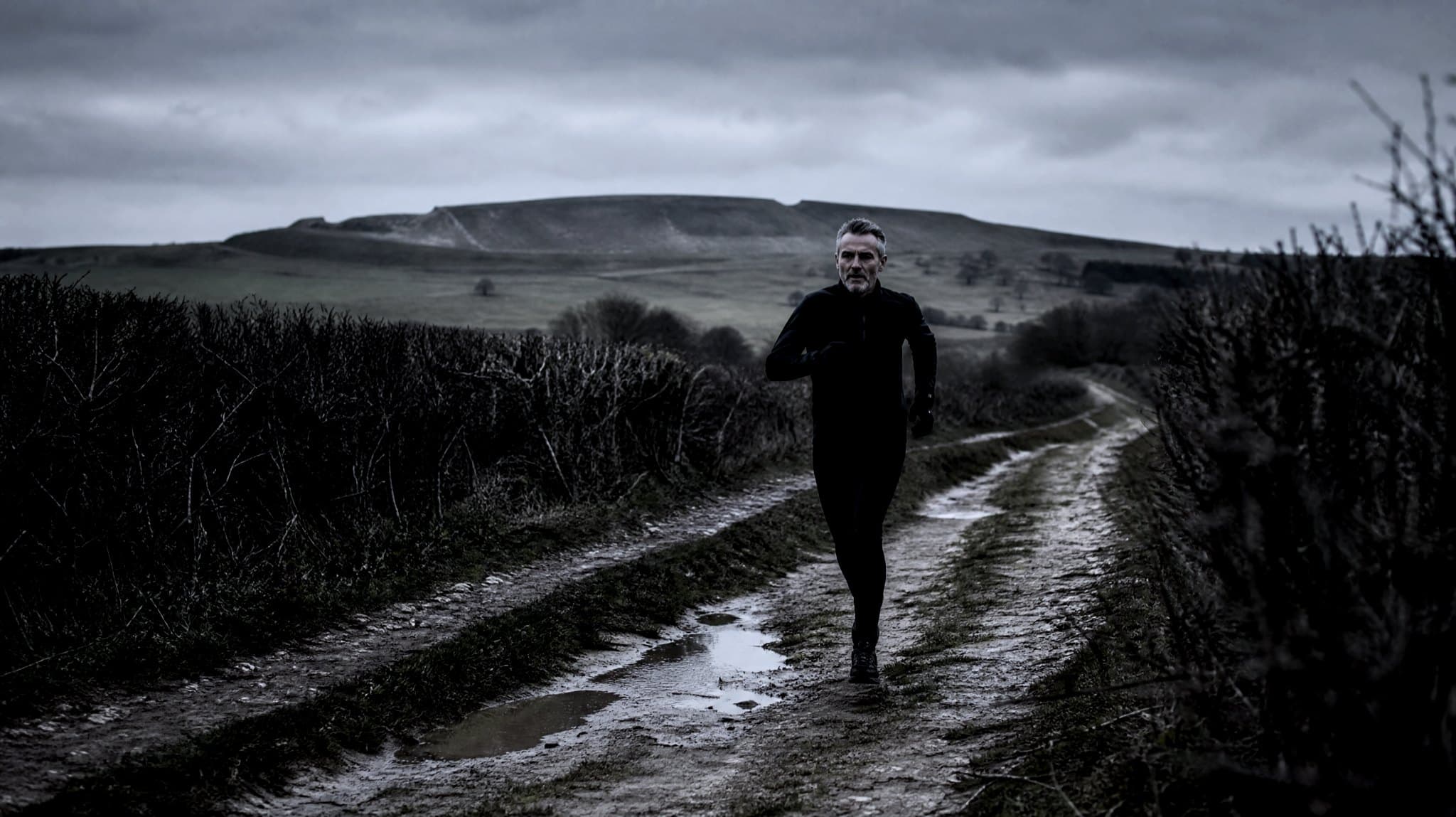
You navigate by the Ridgeway's National Trail waymarks, with the GPX on your watch or phone as XNRG suggests. None of it is technical, but runners describe slippery chalk descents, woodland mud and clay balling up on their soles across ploughed fields. One testimonial on the organiser's site calls one year "probably the muddiest yet". I want shoes that grip on wet chalk, tested on a wet day, and a sock change planned at a checkpoint.
Three days of splits
A stage race hands you three comparable days, and that makes durability easier to read. In the 2025 results the fastest quarter of three-day finishers ran days two and three about 8 to 9 per cent quicker than day one. The slowest quarter ran them about 2 per cent slower. Day one is the longest, and weather and ground change by the day, so treat that as a pattern, not proof.
In training I compare pace at the same heart rate on day two of a back-to-back weekend against day one. On mud both numbers are rough proxies, so I read the trend across weeks. If day two keeps costing more, sleep, fuelling, a heavy week at work or the legs could each be behind it, and we talk before I change the plan.
Six weeks out, or a year
Six weeks before the 2026 race, it's too late to build, so I'd sharpen: two back-to-back weekends, one late start into darkness, a kit and feet rehearsal, then two quiet weeks. For 2027, whose date isn't out yet, the build starts in summer. Two strength sessions a week. Back-to-back weekends from September, fitted into the training week note. One three-day block about a month out. Over 40, the morning after matters as much as the run, and the recovery note explains what your morning numbers can and can't tell me. For a Marathon des Sables runner, the Druid's is a cheap rehearsal of getting up and going again.
What I check before Ivinghoe
- Pace at the same heart rate on day two of back-to-back weekends, against day one.
- What the athlete ate between finishing one day and starting the next.
- The late-start rehearsal: torch on in time, layers on before the cold, eating after dark.
- Feet after two wet days in a row, and whether the sock change happened.
- Whether day one pace in training matches the start group chosen for day three.
- Sleep on the nights of a three-day block, away from your own bed if possible.
Facts checked October 2026 against druids.xnrg.co.uk (home, route and race-day preparation pages), the checkpoint sheet linked from the route page, the xnrg.co.uk 2025 results and XNRG's Race Space entry page: the 13 to 15 November 2026 dates; daily distances of 29.5, 27.3 and 28.2 miles from the checkpoint sheet, which is the 2024 version; three checkpoints a day; hall accommodation at Thame and Didcot with meals; the start waves and pace groups; no cut-offs; a compulsory phone and 500 ml of water, with the head torch recommended as essential; navigation by National Trail waymarks; fees of £320, £229 and £77 a day; and 83 three-day finishers in 2025. The organiser gives the total as 83 miles (home page), 84 miles or 135 km (entry page) and 85 miles (results page), and the entry page puts the first night in Watlington rather than Thame. The 2,203 m of ascent comes from the 2025 results page. Descent, high point, a finish rate, bag rules and the 2027 date weren't published. Sunset times are computed from sunrise and sunset data for Didcot. The day-on-day percentages and the median day one time are my arithmetic from the 2025 splits. Mud, dark finishes and fast first days come from runner reports. Evidence level: the back-to-back and fuelling advice matches the field notes; matching your start group to day three is coaching practice.
Entered the Druid's?
Tell me your longest back-to-back weekend, which start group you're thinking of and how you sleep away from home.