
Race training · Mountain and technical
Lavaredo Ultra Trail 120K training: a Dolomites loop that starts at bedtime
Darren Ware, ultra running coach · updated · 9 minute read
- Distance
- 120 km, loop from Cortina d'Ampezzo
- Ascent
- 5,800 m+ published · 5,364 m on the organiser's GPS track
- Descent
- 5,346 m (organiser's GPS track data)
- High point
- 2,451 m · Forcella Lavaredo 2,449 m
- Time limit
- 30 hours · 23:00 Friday start
- Crew
- Cimabanche and Col Gallina only, one person
- Finish rate
- 68.9% (2026), 72.8% (2025)
- Next edition
- 25 June 2027, the 20th edition
- Entry
- Lottery (2027 closed) · UTMB Index 100K or 100M · €320.31
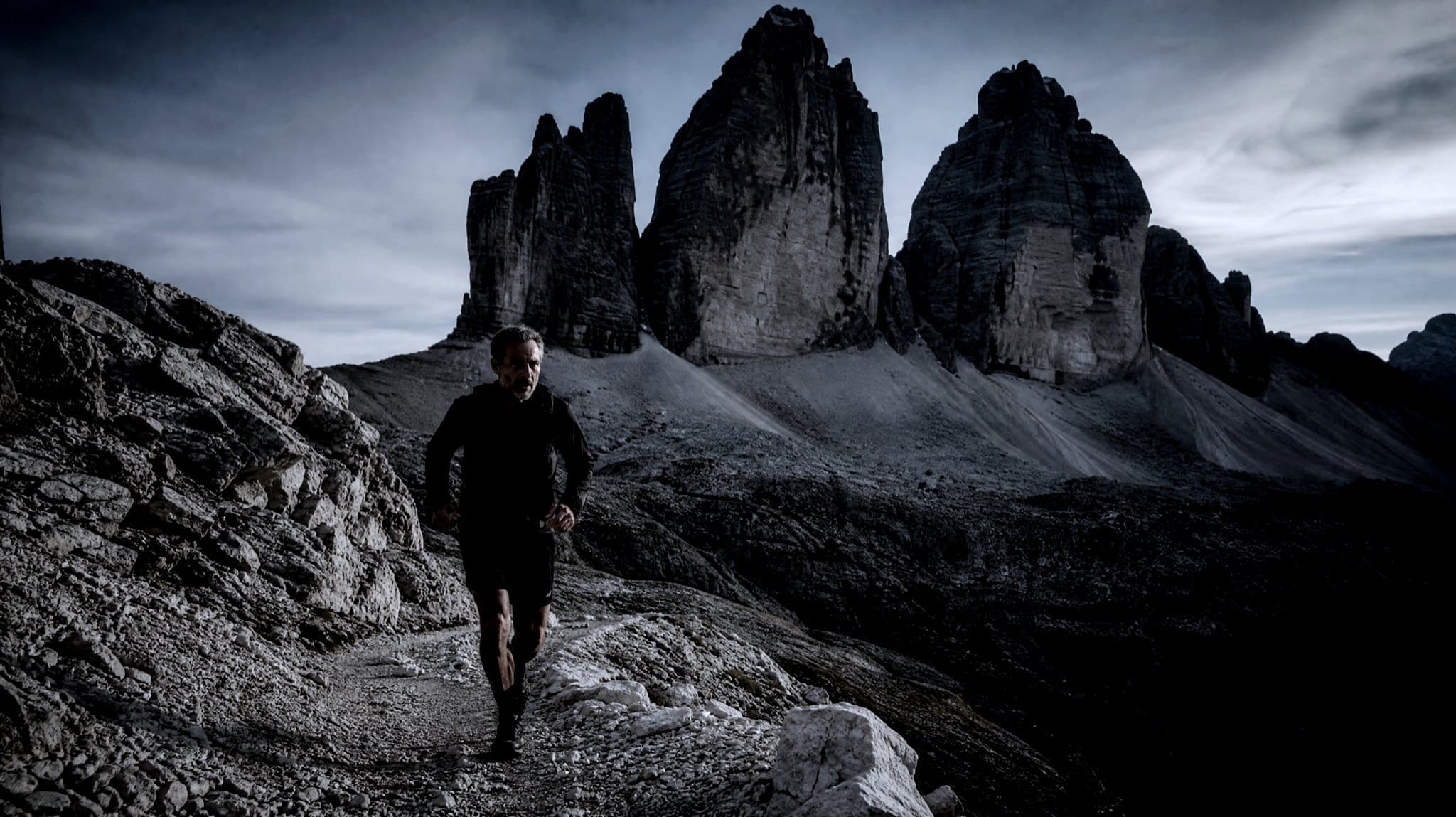
Lavaredo 120K starts on Corso Italia in Cortina d'Ampezzo at 23:00 on a Friday in late June and loops through the Dolomites back to the same street. In 2027 it runs on 25 June, its 20th edition. The limit is 30 hours, so the finish closes at 05:00 on Sunday. The route goes out by Passo Tre Croci and Misurina, round the Tre Cime by Forcella Lavaredo, then back by Cimabanche, Col Gallina, Passo Giau and Croda da Lago. About seven in ten starters finished in 2025 and 2026.
My plan rests on two facts: you start at bedtime, and the hard part comes late.
Two numbers for the same climbing
The race page, the regulations and the UTMB Index all give 5,800 m of climbing. The organiser's own GPS course data on the same page reads 5,364 m up and 5,346 m down. The organiser does not explain the gap of more than 400 m. I plan for 5,800, because planning for the smaller number is the costly mistake, and I tell athletes to pace by section times and cut-offs, never by the ascent total on their watch.
Starting at bedtime
A 23:00 start puts the first night at the end of a day you have already spent awake. Runners report reaching the Tre Cime around dawn on no sleep. One 2023 finisher had to sit down several times on the climb between 45 and 60 km to get his heart rate below 180.
So I rehearse the day as well as the night. Twice in the spring, an athlete starts a long run at 22:00 or 23:00 after a normal working day, with a planned nap and a normal evening meal before it. Then we review how they ate, how the climbs felt at dawn and how long recovery took. The night note covers sleep banking in the week before, which matters more here than at a morning start.
- Cortina, 23:00 Friday
Start. The first climbs go by headtorch.
- Passo Tre Croci, 27.8 km, 04:30
The first night nearly done.
- Misurina, 42.2 km, 08:00
The Tre Cime next. Rifugio Auronzo at 48 km is water only.
- Cimabanche, 66.9 km, 13:30
First of the two crew points, in the middle of the day.
- Col Gallina, 96.6 km, 21:30
Second crew point, after the fountain at Malga Travenanzes.
- Passo Giau, 104.1 km, 23:59
A second night begins for the back of the field.
- Cortina, 120.8 km, 05:00 Sunday
30 hours.
The back forty
Two race reports put the real race in the second half. "The last 40k are probably the most challenging of the whole course," wrote one 2025 finisher. He described the section from Malga Travenanzes to Col Gallina, roughly 90 to 98 km, as "really exposed to the sun and the heat," on steep stony climbs where "the feet lost grip because of small stones." From Passo Giau to Croda da Lago it was "down, up, down, up and down again." He fell five times, mostly struggling on the downhills. A 2023 finisher took his first fall between 80 and 100 km, made the final descent into Cortina in a second night, and was hallucinating by then.
The organiser asks for shoes suited to "Dolomite terrain (stones, rocks, gravel)". I train for that late in the day. Long runs end on loose, rocky descents. Strength work covers the ankles and calves as well as the quads, because small stones under a tired foot make an ankle problem first. The descents note sets out the progression.
Huts, cutlery and two crew stops
There are eight refreshment stations, water-only points at Rifugio Auronzo and Malga Travenanzes, and crew at Cimabanche and Col Gallina only, one person each. The kit list asks for your own cutlery and containers for hot food, at least €20 for the huts, warm waterproof gloves, long trousers or tights and a hooded jacket of at least 10,000 Schmerber. The list can change up to 12 hours before the start, and poles are allowed. I want hot food eaten from your own container in training, on the move, and a carbohydrate plan that works around two long gaps between crew points. The carbs note is where it starts.
What the watch can and cannot see
On rocky Dolomite ground, grade-adjusted pace is approximate, and heart rate after a sleepless night is a proxy at best. So I read the durability numbers from comparable ground in training: climb rate in the last two hours of a long run against the first two, and descending on stony ground late against the same ground fresh. The athlete logs trips and falls, because the watch cannot. I am looking for legs and feet failing while the engine still works. Then I decide whether the next block needs more descending, more strength or more rest.
From the lottery to Cortina
The 2027 lottery closed on 14 September 2026. You need a UTMB Index in the 100K or 100M category, and anyone who missed both the 2025 and 2026 lotteries was guaranteed a 2027 place. A medical certificate is required under Italian law, uploaded between 10 January and 15 May 2027 and valid on 27 June 2027. The race is in the 100M category and earns four Running Stones, which matters if UTMB is the longer plan.
Twenty-six weeks from Christmas
For a 25 June start I use 26 weeks, from the last days of December. Two strength sessions a week throughout, with calves and ankles alongside the quads, never in the 48 hours before a long day.
- Stony descents. From week 1, three 5-minute downhill runs on a 5 to 10% slope, at least every two weeks. From week 9 on loose, rocky ground; from week 17 at the end of long days, where the Giau to Croda da Lago section will test you.
- Climb-rate days. Long hill days whose length grows about 10% at a time against your longest of the previous 30 days, holding after three steps up. I time the last big climb of each day against the first.
- Bedtime starts. In weeks 17 and 21, a 4 to 5 hour run started at 22:00 or 23:00 after a normal working day, with the evening meal and nap you'd use in Cortina.
- The mountain weekend. From week 17, a back-to-back every two to three weeks, the second day at 40%, then 60%, then 70% of the first. The biggest, about 5 hours on steep ground then 3.5, lands five weeks out. Hot food from your own container goes in it, with carbohydrate built 10 g an hour every one to two weeks to race rate two weeks out.
The taper is three weeks: volume down a quarter, then 40 per cent, then 60, and nothing new in the final fortnight.
What I watch for Lavaredo
- How the athlete eats, climbs and recovers on the two 22:00 or 23:00 long-run starts.
- Climb rate in the last two hours of long runs, especially on steep stony ground.
- Late descending on loose rock, and any trips or falls the athlete logs.
- Ankle and calf complaints after rocky days, picked up the day they start.
- Hot food from their own container, eaten on the move, in rehearsal.
- Sleep in the week before the race, because the race takes a night away at the start.
Facts checked October 2026 against lavaredo.utmb.world: 120 km from Corso Italia, Cortina, the route and aid stations above, 5,800 m+ as published on the race page, regulations and UTMB Index, against 5,364 m up and 5,346 m down in the organiser's own GPS course data, a 2,451 m high point, a 30-hour limit from a 23:00 Friday start on 25 June 2027, crew rules, mandatory kit, the 2027 lottery, priority places, the €320.31 fee, the medical certificate window and four Running Stones. The intermediate cut-offs carry 2024 and 2025 dates in the course data and are shown as past editions' cut-offs. Finish rates of 68.9% (2026) and 72.8% (2025) are counted from the UTMB Index result lists. Quotes and race details from runners come from their own race reports. The organiser does not publish typical weather. Evidence level: night running, descending and fuelling physiology matches the field notes; the late-start rehearsal is coaching practice, and so are the 26-week build, the downhill dose, the back-to-back steps, the fuelling ladder and the taper cuts.
Heading to Cortina?
Tell me how you cope with a night of no sleep and what your feet do on loose rock.