
Race training · Mountain and technical
Transgrancanaria Classic training: a cold midnight start, then a hot island day
Darren Ware, ultra running coach · updated · 8 minute read
- Distance
- 126 km, point to point (2027)
- Route
- Las Canteras beach, Las Palmas, to Maspalomas
- Ascent · descent
- 6,764 m up · 6,734 m down (2027 profile)
- High point
- 1,724 m
- Time limit
- 30 hours · 23:59 Friday start
- Drop bags
- Fontanales and El Garañón
- Finish rate
- 56% (2026) · 64% (2025, secondary)
- Next edition
- 26 February 2027
- Entry
- Open, first come first served · €180 to €225 · not a UTMB race
The Transgrancanaria Classic crosses Gran Canaria from north to south. It starts on Las Canteras beach in Las Palmas at 23:59 on Friday 26 February 2027 and finishes at Parque Sur in Maspalomas, 126 km later, with 6,764 m of climbing and 6,734 m of descent on the organiser's 2027 profile. It tops out at 1,724 m and the finish closes at 06:00 on Sunday. In 2026, 488 of 871 starters finished, which is 56 per cent.
Two things set it apart from the other mountain races in this library. Entry is open, first come first served, with no qualifying race or Index requirement published. And for a British runner, a late-February race means the whole build happens in winter.
Midnight on the beach
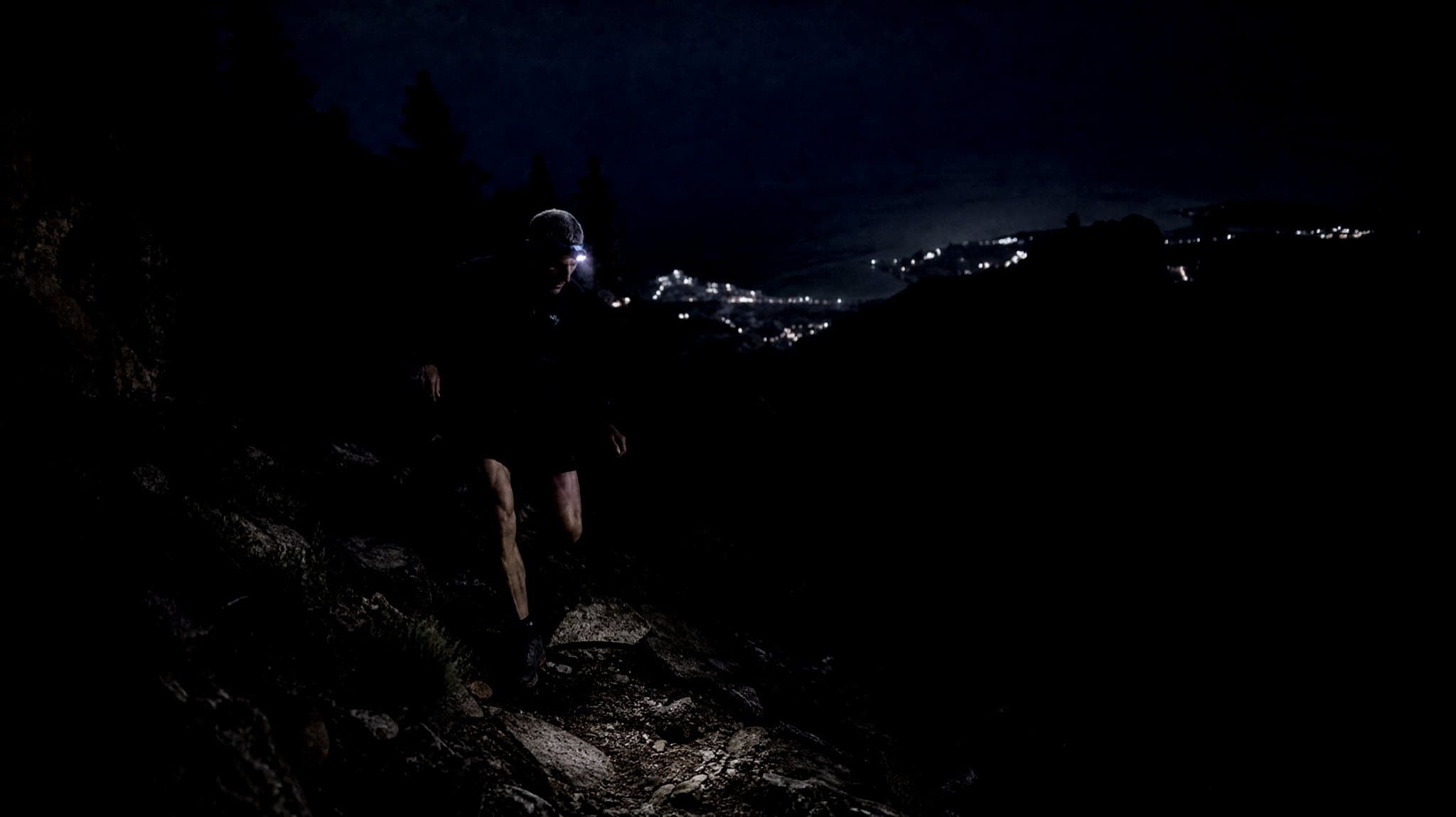
You start at one minute to midnight, so the first night comes before you have run a step. The organiser makes cold kit mandatory unless it removes some or all of it two days before: warm gloves, windproof trousers, a thermal T-shirt and long thermal tights. The headlamp must give at least 200 lumens, with spare batteries, and you need a red tail light at night. In 2026, runners set off under cool, cloudy skies with rain, according to race reports. In 2027 you must leave Teror, 31.6 km in, by 06:10.
Then the sun comes up
The organiser does not publish typical weather, so this part comes from runners. By midday in 2026 the leaders were picking up ice at the aid stations to stay cool. A Scottish runner on the 2025 Advanced, which shares the back half of the course, wrote that his "Scottish Winter training [was] not really beneficial for a hot sun and 25C". The 2027 cut-offs keep the back of the field in the middle of the island all afternoon: Artenara by 15:10, Tejeda at 79.2 km by 18:00.
So the heat work goes in during the three weeks before you fly: sauna or hot baths after easy runs, and some overdressed running. The heat note has the protocol. Fluid is to thirst, with sodium planned, using the hydration note. One 2025 runner blamed mixing his drink with local tap water for stomach trouble from 11 km, and says nearly 20 others had the same. I would rather an athlete used drinks they have tested at home.
A build that runs through winter
From early October to a 26 February start is about 21 weeks. Most of it is dark by teatime, wet underfoot and squeezed by Christmas. The full-time job note is how I fit it round work. Night running at least schedules itself: in December most evening runs start in the dark, and I make a few of them long, with the race headlamp. Climbing comes from hills, stairs or an incline treadmill. The descents need real ground, and British mud does not teach dry loose rock, so I look for the rockiest ground the athlete can reach.
The last 35 kilometres
After El Garañón at 90.8 km, where the cut-off is 20:45, runners describe two descents of more than 1,000 m each, and say that is where quads go. Then comes Tunte, with a 23:25 cut-off, and Ayagaures at 112 km, which closes at 02:25 on Sunday. Slower runners meet a second night there. Race reports describe the finish as a "brutal 7KM riverbed of loose stones" into Maspalomas, after a last climb and technical descents. I train for it with long descents on tired legs, progressed through the winter using the descents note, and long runs that finish on rough ground.
Open entry, and what you give up
Registration opened on 1 July 2026 and the Classic was still open on 1 September, after the Promo, Open Agáldar and Marathon races had sold out. Fees run €180, €205 and €225 depending on when you enter. You must be 18 or over and supply a medical certificate. The organiser's pages give two deadlines for it, 14 and 21 January 2027, so work to the earlier one. The race belongs to the World Trail Majors circuit, not the UTMB World Series, so it earns no Running Stones. Crew can meet you at Arucas, Teror, Fontanales, Artenara, Tejeda, El Garañón and Tunte. The kit list includes 1.5 L of water capacity, a cup or soft flask, a phone that works in Spain and at least €50 in cash.
Cold data, hot data
Heart rate at easy pace in December means what it says. In heat, heart rate climbs at the same pace as the body works to cool itself, so I read the heat sessions on their own and do not compare them with the winter runs. I look at late-run descending against the same ground fresh, and whether easy-pace heart rate in the heat block drops week on week as acclimation takes. The watch shows the change but not its cause, so I read it beside the athlete's report.
What I watch through the winter
- Whether the long night runs in December and January actually happen.
- Late-run descending on the rockiest ground available, against the same ground fresh.
- Easy-pace heart rate through the heat block, read apart from the winter data.
- How the gut handles the race drinks after a night without sleep.
- Training lost to Christmas, illness and work, and how the plan absorbs it.
- Legs in the two days after the biggest descent sessions.
Facts checked October 2026 against transgrancanaria.net: the 2027 Classic page, profile, regulations and prices page for 126 km, 6,764 m up and 6,734 m down, a 1,724 m high point, a 23:59 start on 26 February 2027, a 30-hour limit, the 2027 cut-offs above, drop bags, crew points, mandatory and cold kit, the medical certificate, fees and open registration. The 2027 table gives Tunte at 98.4 km and the profile at 100.4 km. The 2026 finish rate of 56% (488 of 871) is from the official LiveTrail timing; the 2025 rate of 64% (568 of 883) is secondary, from the UTMB Index. Its status outside the UTMB World Series is from the organiser. The organiser does not publish typical weather: the heat, the riverbed finish, the descents after El Garañón and the stomach problems are runners' own reports. Evidence level: heat acclimation and its decay are well supported; the winter build is coaching practice.
Entered the Transgrancanaria?
Tell me what your winter usually looks like and how you cope in heat after a night without sleep.